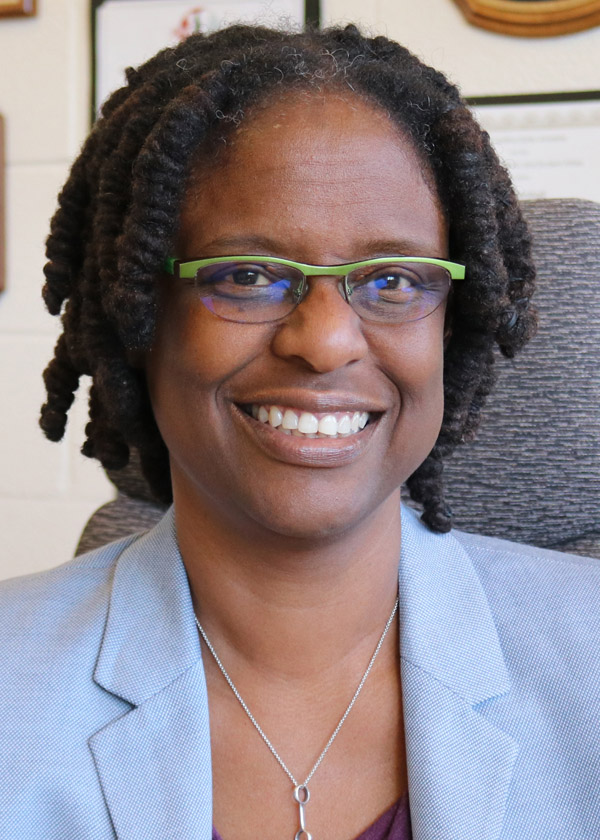
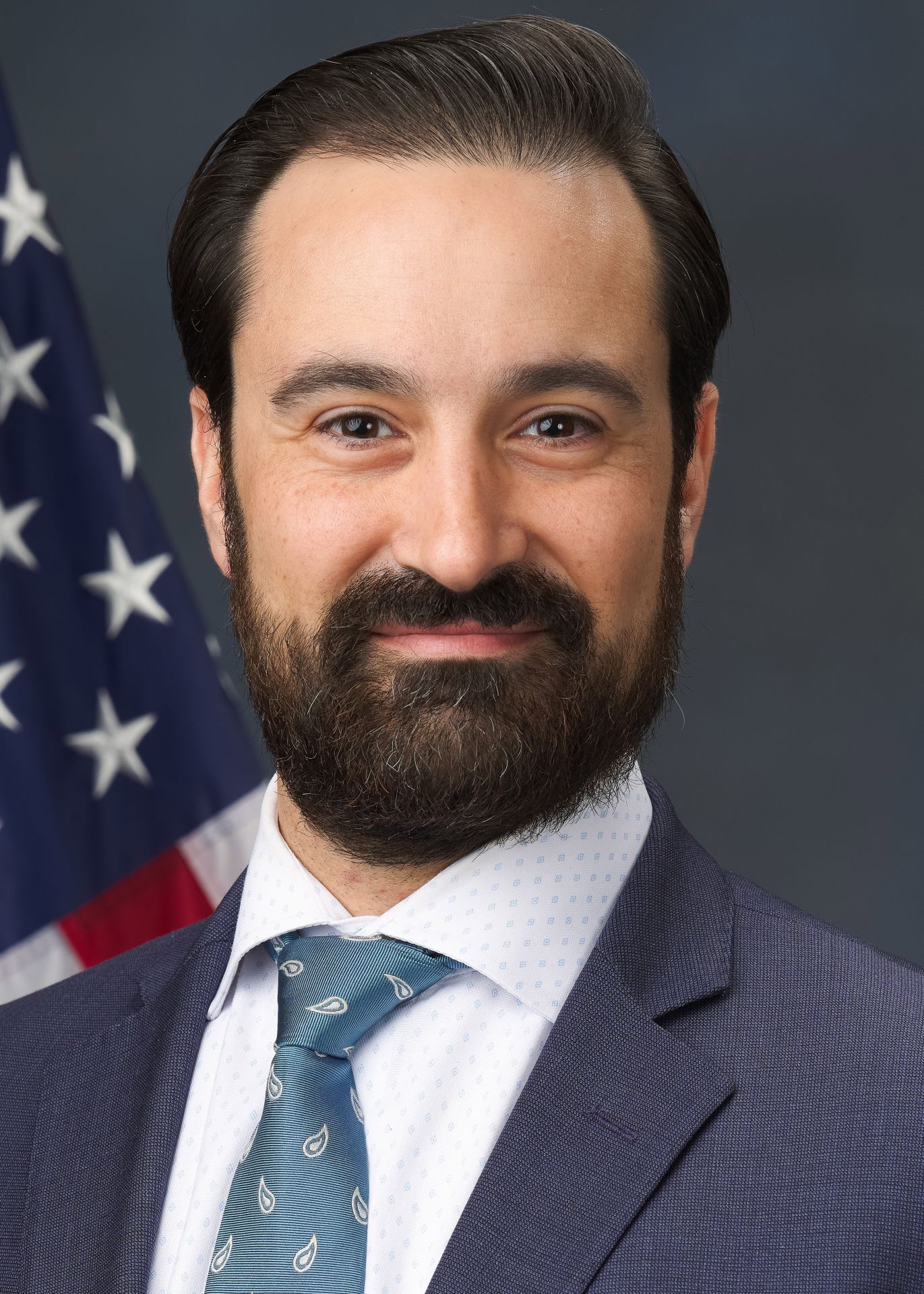
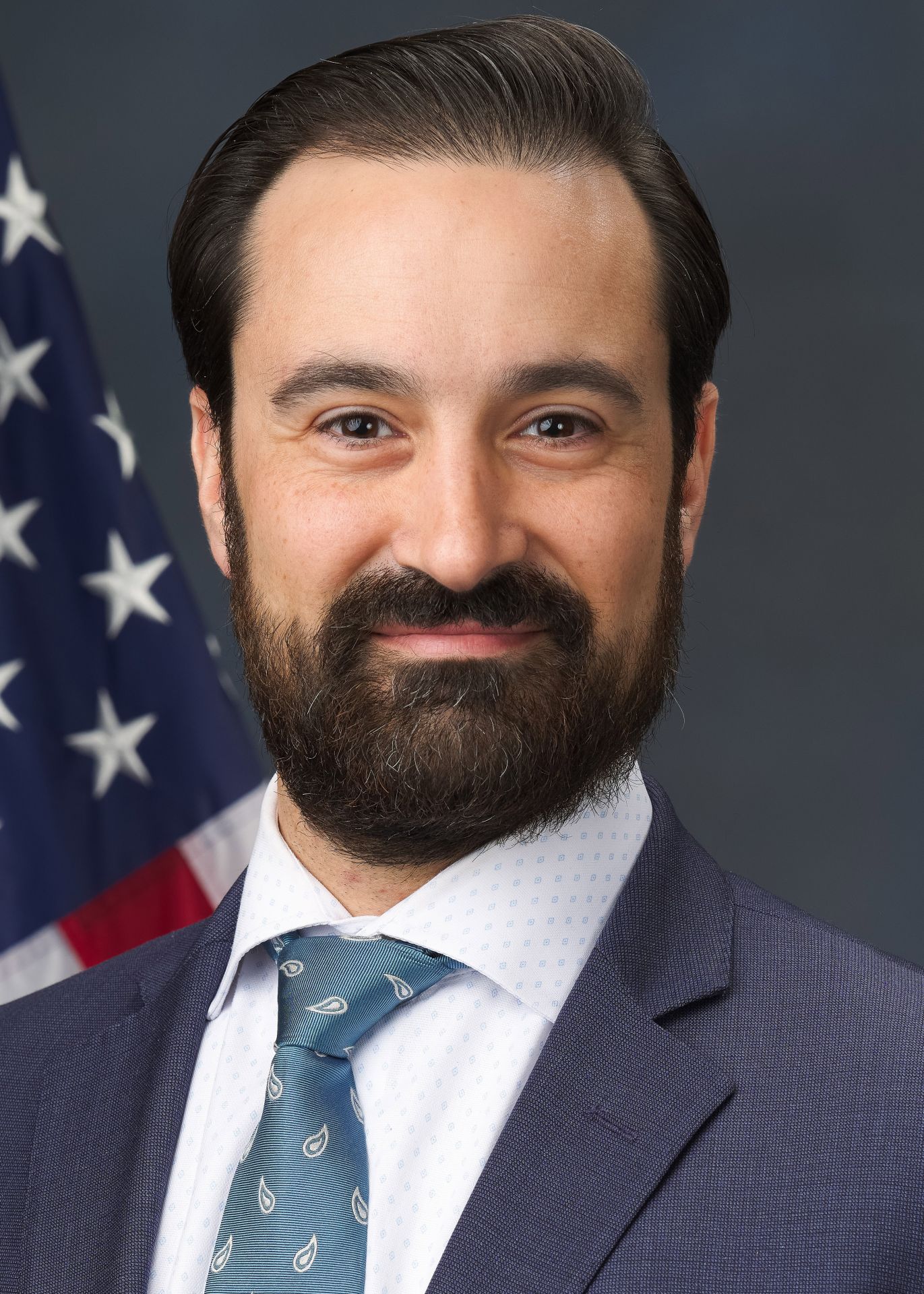
NRC Chairman Ho Nieh speaks to attendees at RIC 2026. (Photo: NRC)
Even a last-minute cancelation from Department of Energy Secretary Chris Wright could not derail the optimism permeating day 1 of the Nuclear Regulatory Commission’s annual Regulatory Information Conference (RIC).
The optimistic theme came up several times during the morning plenary sessions that highlighted Tuesday’s agenda. The NRC commissioners who spoke said the optimism was a result of the “nuclear renaissance” they are encountering that feels different from past nuclear-related revivals that didn’t materialize.
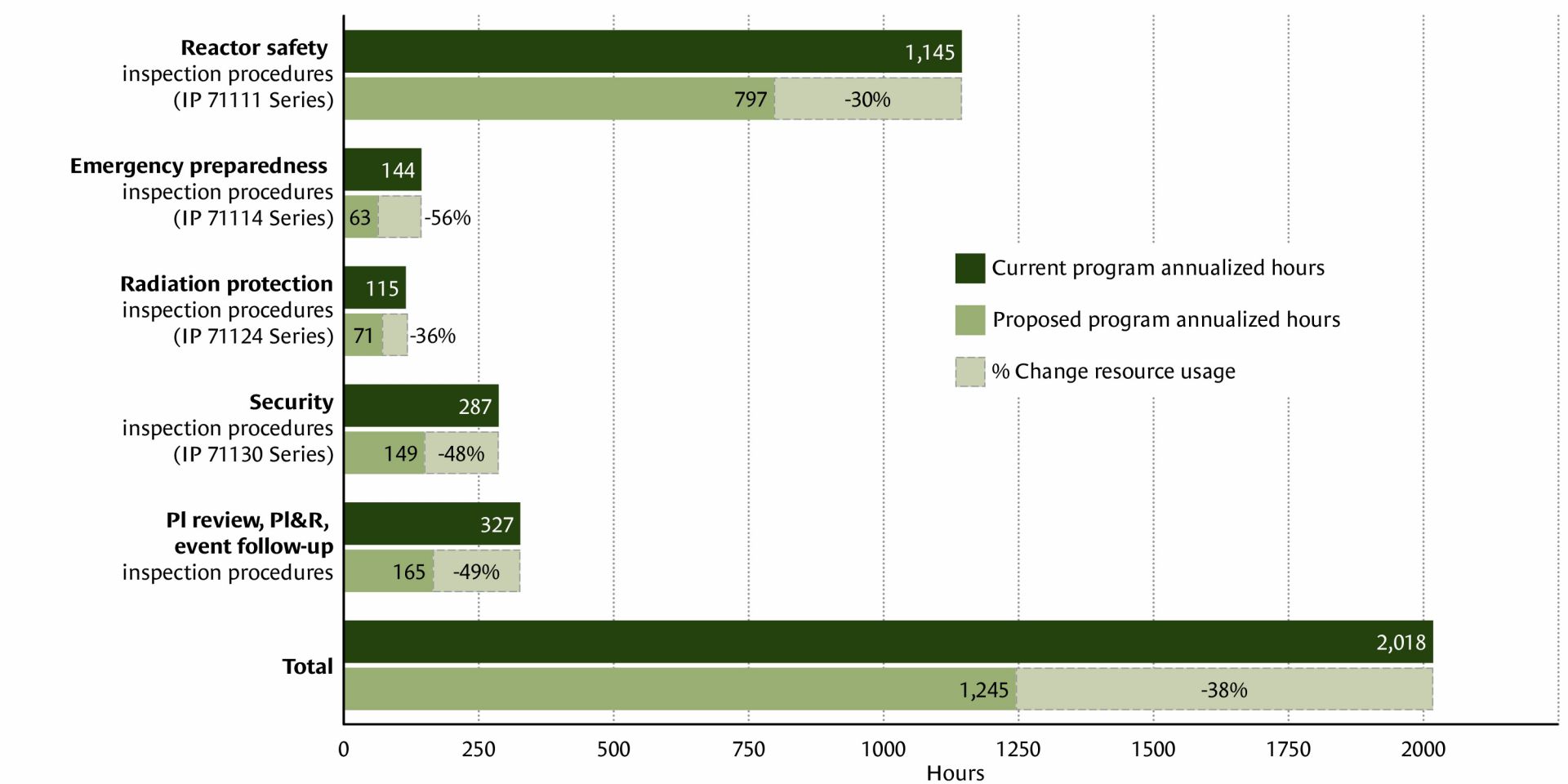
The difference in ROP inspection hours from current levels to proposed levels at a typical nuclear power reactor. (Data: NRC, adapted from SECY-26-0014, p. 24)
The Nuclear Regulatory Commission staff is recommending proposed changes for the Reactor Oversight Process (ROP) baseline inspection program that could reduce the number of hours spent annually on direct inspections at U.S. nuclear power plants by 38 percent.
In addition to the proposed ROP changes, NRC staff published recommendations for the baseline security program that would reduce the number of direct inspection hours necessary for this program by about 50 percent compared to current levels. This includes the Force-on-Force (FOF) inspection program.
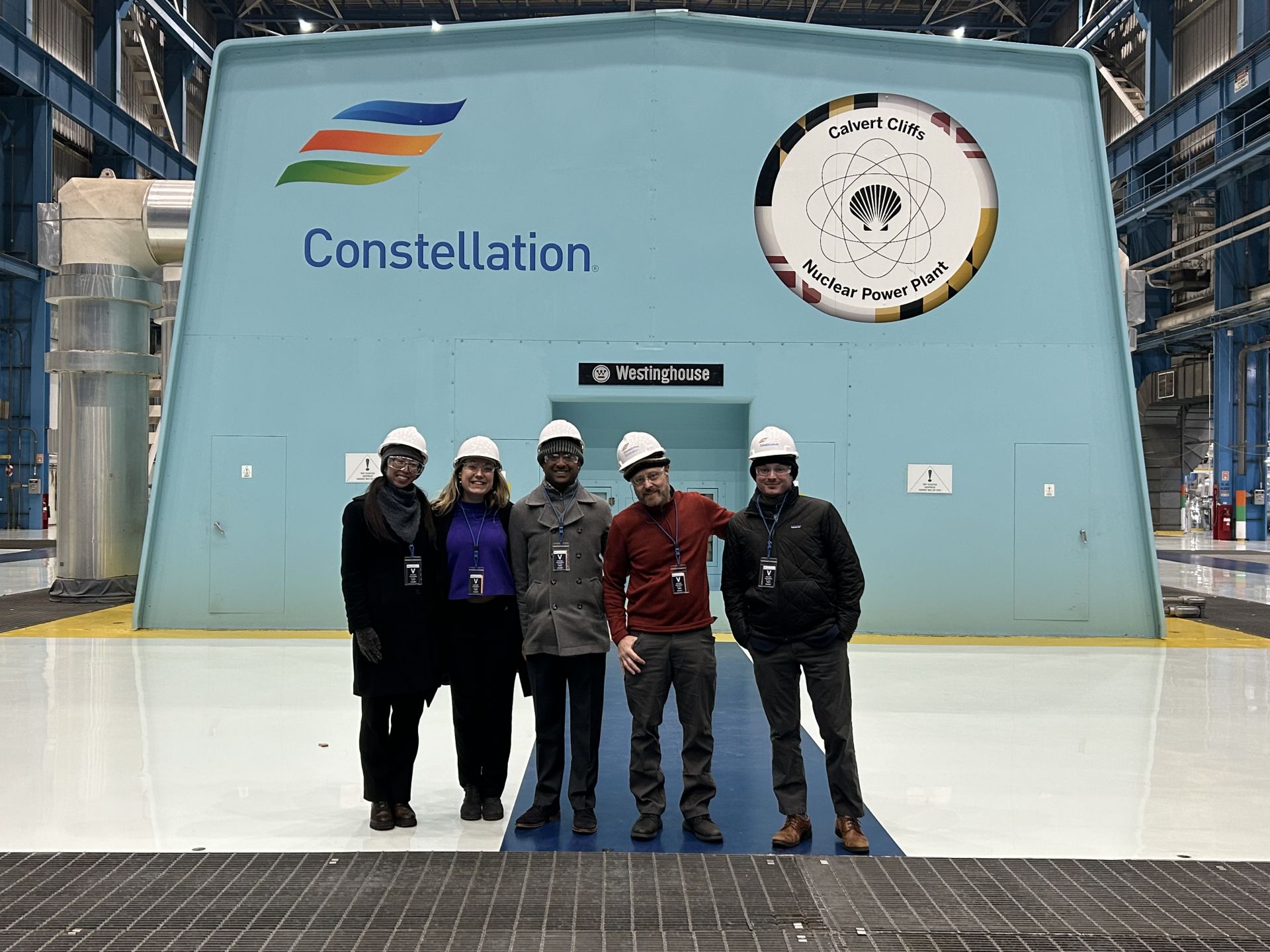
2025 ANS Congressional Fellow Mike Woosley alongside staffers from the Climate Solutions Foundation and the offices of Sens. Coons and Kelly on a tour of Calvert Cliffs.
Each year, the American Nuclear Society awards the Glenn T. Seaborg Congressional Science and Engineering Fellowship to two members. Those recipients then spend a year in Washington, D.C., contributing to the federal policymaking process by working in either a U.S. senator’s or representative’s personal office or with a congressional committee.
It has been nearly six months since the 2025 Congressional Fellows provided their midterm updates on their time on the Hill. Now, as their fellowships draw to their close, Jacob Christensen and Mike Woosley are looking back on what they accomplished, what they learned, and much more.
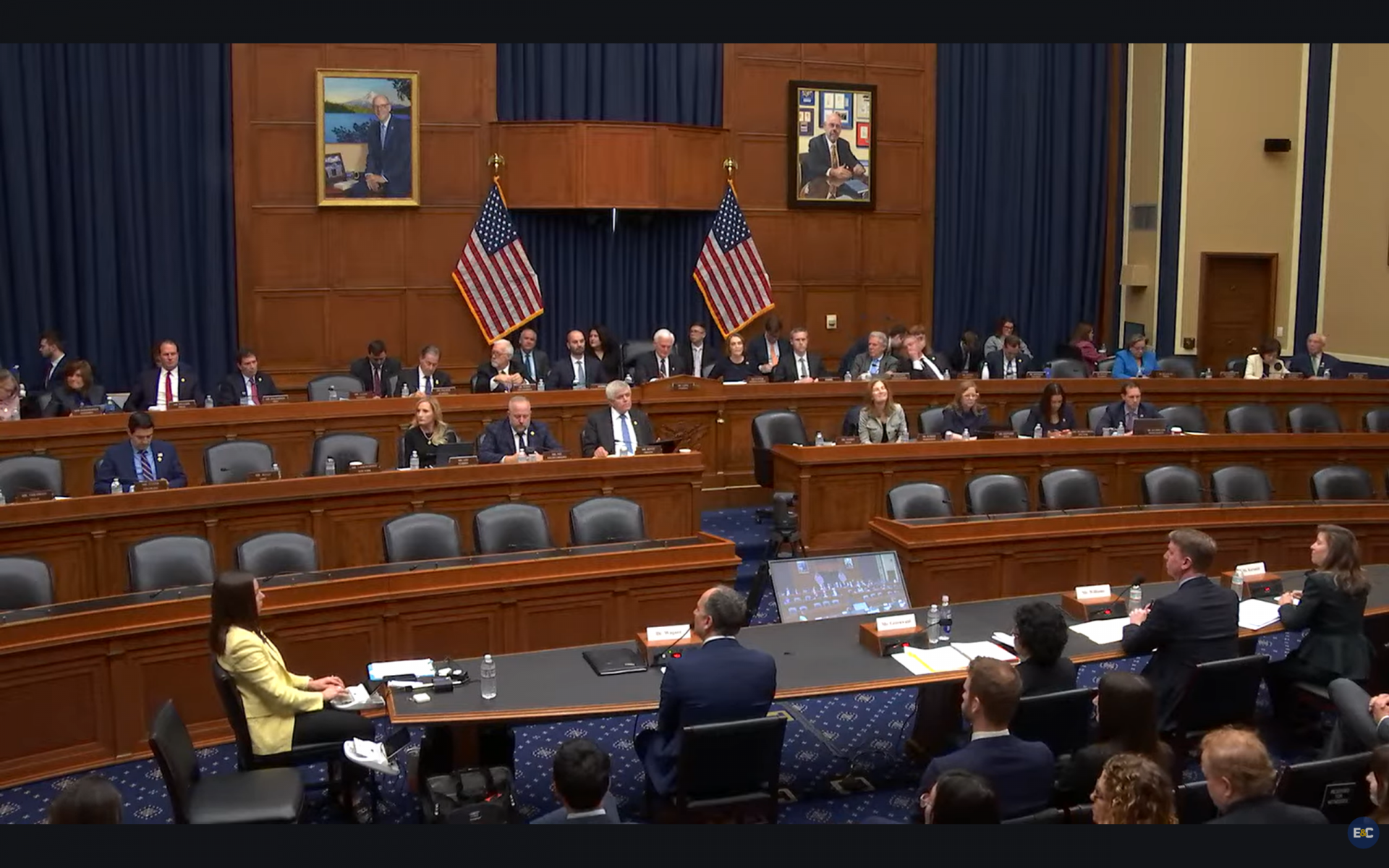
Still from a video of the Energy Subcommittee hearing, "American Energy Dominance: Dawn of the New Nuclear Era." (Credit: House Committee on Energy and Commerce)
The U.S. House Energy and Commerce Subcommittee on Energy convened its first hearing of the year, “American Energy Dominance: Dawn of the New Nuclear Era,” on January 7, where lawmakers and industry leaders discussed how nuclear energy can help meet surging electricity demand driven by artificial intelligence, data centers, advanced manufacturing, and national security needs.

-3 2x1.jpg)

.png)